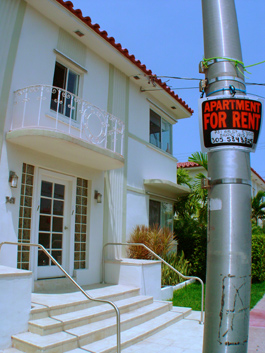
About Philadelphia Apartments

Welcome to the Philadelphia Pennsylvania blog. This blog contains a wealth of information about Philadelphia, Pennsylvania, Apartment living, and housing opportunities in our great city and other metro areas of the U.S.. Learn about efforts at restoring architectural relics of the past - former factories, warehouses, schools, hotels, hospitals, train stations - into first-class houses and apartments, and in preserving these distinguished residential communities for future generations. Please enjoy your stay on our Philadelphia apartments blog and feel free to share your stories on life in Philly and the city of brotherly love. In addition, we welcome all commentaries regarding building remodeling, home remodeling, kitchen remodeling, bathroom remodeling, and house hunting. Thank You!

Thursday, December 18, 2008

RIDC plays big part in economic development


As posted by: Pittsburgh Live

Donald F. Smith is joining a regional economic development corporation as president, but that doesn't mean he'll disconnect completely from the two universities where he's been director of economic development since 2002.

Smith is leaving the joint post he held for the University of Pittsburgh and Carnegie Mellon University to become president of the Regional Industrial Development Corp. of Southwestern Pennsylvania sometime in January.

Still, Smith likely will continue to deal with Pitt, CMU and other schools that foster development of spinoff companies.

The RIDC historically has played a key role in development of some of the commercial buildings that served the needs of the universities themselves as well as firms developed by students and faculty, and outside companies looking to move close to the schools.

For example, the corporation partnered with CMU on buildings including the Software Engineering Institute in Oakland and the Collaborative Innovation Center on the school's campus.

Smith played a role in development of the innovation center, the only building in the world with Intel, Apple and Google employees under one roof.

"I believe that the RIDC can still be a resource for the universities," Smith said.

With the universities attracting more than $1 billion a year in research dollars and helping to spawn spinoff companies, officials have estimated that more than 1 million square feet will be needed to house such firms over the next 10 years.

That's one of the reasons why the city's Urban Redevelopment Authority announced plans to develop up to nine buildings at the Pittsburgh Technology Center in South Oakland.

The RIDC has considered building an addition to its 2000 Technology Drive building at the Pittsburgh Technology Center, where Cleveland developer Ferchill Group's $46 million Bridgeside Point II is under construction.

And the RIDC is general partner in Almono LP, a nonprofit partnership of four local foundations that teamed in 2002 to buy the 178-acre former LTV Steel site in Hazelwood. A $400 million development that could create 2,400 jobs and include housing, commercial space, community amenities and green space is planned there.

One of Smith's tasks will be to help choose a master developer for that property, which could be a location for companies looking to move close to the Oakland universities.

The Pittsburgh Zoning Board of Adjustment on Thursday will review plans to put nine parking spaces on a lot at 44th and Calvin streets in Lawrenceville for The University of Pittsburgh Medical Center's Children's Hospital. The board will review Atallah Khali's request to put 10 parking stalls at the rear of a three-story, 12-unit apartment at 343 McKee Place, Oakland. Brandy Mangham will seek approval for a child care center for up to 12 children at 52 Grape St., 30th Ward. Pennsylvania American Water wants to use 640 square feet in a one-story building at 317 Knox Ave., Knoxville, for chemical storage abutting its existing pump station.

Construction activity for the year in Pittsburgh reached $891 million through October; 201 permits valued at $102 million were issued, the Bureau of Building Inspection said. The largest permit was $30 million for a six-story parking garage at Bakery Square, 6425 Penn Ave., East Liberty. Although permits for only four single-family houses were issued, they brought the totals for the year to 157, compared to 67 for all of 2007.

The Green Building Alliance and its executive director, Rebecca Flora, will review the latest local and national green building initiatives at the alliance's annual meeting at 7:30 p.m. Wednesday at the Regional Enterprise Tower, 425 Sixth Ave., Downtown.

A Rite Aid pharmacy has opened at 7345 Saltsburg Road, Penn Hills. It has more than 11,000 square feet. The company plans to open about 85 stores nationwide this fiscal year.

A sales center has opened for the 28-unit Residences condominiums at Three PNC Plaza, Downtown. Howard Hanna Real Estate Services operates the center and said three of the units have been sold.

Daniel Friedson, along with artists, law students and volunteers, has opened an arts and entertainment incubator in the former PNC Bank office at 6000 Penn Ave., East Liberty. Friedson, who runs the Community Economic Development Clinic at the University of Pittsburgh School of Law, said most activities are offered on Saturdays. The incubator offers low-cost facilities and space for performing artists.

Urban Homesteaders in Allegheny County will receive a $94,710 agriculture planning grant from Commonwealth Financing Authority for the Blackberry Meadows Farm Commercial Kitchen/Farmers Market in Fawn Township. The Pittsburgh History and Landmarks Foundation will receive an $83,000 agriculture planning grant for the Farmers' Markets in Washington and Westmoreland counties.

One of Bernardo Katz's former properties in Beechview has been sold. S&T Bank foreclosed on, then acquired, in June 1550-54 Beechview Ave. Clement M. Okoye purchased it for $180,000, according to a deed filed in Allegheny County. The property includes a one-story bank building, three-story mercantile apartment building and one-story mercantile building.

A community shopping center at 560 Route 51, Pleasant Hills, has been sold to Progress CL LLC, in care of Superior Realty Group of Brooklyn, N.Y., for $3.75 million, according a deed filed in Allegheny County. Robert I. Glimcher of Glimcher Venture Holdings Inc. was the seller; Goldy Rabinowitz signed for Progress, part of Highfield Two Associates LLC.

Monday, October 13, 2008

Mall Vacancies Grow as Retailers Pack Up Shop

Mall Vacancies on the riseShopping Venues See Uninhabited Rate Reach 8%, But Not All Is Bad in Commercial Sector as Apartment Rents Rise

Vacancy rates at U.S. malls and shopping centers continued their steep rise in the third quarter as slumping sales forced retailers to close stores.

Malls are seeing their highest vacancy rate since 2001, according to data released by real-estate-research firm Reis Inc. For shopping centers, the rate is the highest since 1994.

In contrast, the apartment market, particularly Philadelphia apartments, remained one of the most healthy real-estate markets in the third quarter, benefiting from the struggling home-sales market. Many would-be buyers, unable to get mortgages or worried about the darkening economy, are renting apartments instead.

In the top 79 U.S. markets, apartments posted a slight increase in the vacancy rate to 6.1%, up from 6% from the previous quarter, and a rise in rents of roughly half a percentage point, according to Reis.

Shopping centers and apartment buildings fall in the category of commercial real estate, which has fared better in the credit crisis than residential. Until recently, most commercial landlords had struggled with the financing drought, but the so-called "fundamentals" of their properties -- vacancy rate, rent and expenses -- remained healthy.

Now that is changing. In the retail sector, vacancy rates have climbed and rent increases have slowed for the past year. The vacancy rate at malls in the top 76 U.S. markets rose to 6.6% in the third quarter, up from 6.3% in the previous quarter, to its highest level since late 2001, according to Reis.

For strip centers and other open-air shopping venues, the vacancy rate climbed to 8.4% in the third quarter from 8.1% in the second quarter. That marks the highest rate since 1994, according to Reis. Meanwhile, retailers' closures outpaced new leases by 2.8 million square feet in U.S. strip centers in the third quarter, the third consecutive quarterly net decline. It is the first nine-month period of so-called negative net absorption since Reis started tracking the data in 1980.

The combined vacancy rate for malls and strip centers in the third quarter was 8%, up from 7.8% in the second quarter. Vacancy tends to be higher in strip centers during economic slowdowns because they have more independent, local tenants, which are more vulnerable to drops in sales than are the national retailers found in malls.

Still, the economic slump has taken its toll on national retailers. Among those that have closed stores in recent months are Starbucks Corp., Dillard's Inc. and Linens 'n Things Inc. More closures likely are on tap, as retailers such as Circuit City Stores Inc. struggle with dwindling sales.

"Almost every retailer has slowed their expansion by 50% to 70% for 2008," said David Brinbrey, chairman and chief executive of the Shopping Center Group, an Atlanta retail brokerage.

Retail landlords are hurt directly by slumping sales because many of them have leases that, in addition to base rent, give them a small portion of payments based on the tenant's sales growth. And retailers feeling the pinch from the shopping slowdown increasingly are asking for rent concessions.

Landlords have little choice but to give breaks to solid tenants. "Chances are, if they're a good merchant, we're going to work with them to get them through this bad time. There's no reason to have an empty space," said Rick Caruso, chief executive of Caruso Affiliated, which owns 10 high-end shopping centers in Southern California.

Sam Chandan, Reis's chief economist, noted that the growing weakness of retailers can be seen in the decline of retail jobs, which have fallen by more than 250,000 nationally in the past year. "Apart from declines in automobile dealers and parts sellers, the last month's declines are broad-based, including department stores, food and beverage retailers, furniture, and electronic and appliance stores," Mr. Chandan said.In the apartment sector, the vacancy increase has been more gradual. But the scarcity of job opportunities for recent college graduates has sapped a primary customer base for apartments, analysts say. And some people who are losing their jobs are moving in with family and friends.

Some foresee rent increases stalling or declining in the coming months as other economic indicators sour. "As unemployment rises, it will be harder for these [apartment] companies to push rent in terms of renewals and new leases," said Michelle Ko, an analyst with UBS Securities LLC.

Analysts report strong apartment occupancy and rent growth in markets including San Francisco, Boston, San Diego and the Pacific Northwest. Rents and occupancy have suffered in boom-bust markets such as Phoenix and Orlando, Fla. But some previously strong apartment markets, namely New York and Charlotte, N.C., might suffer from the loss of financial jobs amid the banking shakeout.

By: Kris Hudson
Wall Street Journal; October 6, 2008

Wednesday, October 8, 2008

Philadelphia's Commercial and Apartment Rental Markets Red Hot

The Lofts at Logan View pictured to the left. One of Center City Philadelphia's most popular residential addresses.

Philadelphia's commercial real-estate and apartment leasing market is holding steady in the midst of the growing economic carnage. Philadelphia's office market, more than the suburbs', has benefited from a steady growth mixed with very little supply.
Historic Landmarks reports that their Philadelphia Apartments have one of the lowest vacancy rates in years. Apartment, retail and warehouse vacancies are at or below averages for the 54 major metro areas as recently audited and surveyed by Real Capital Analytics, a New York-based research firm.
To be sure, the geographic proximity of the region to the crisis on Wall Street -- with Philadelphia about two hours south of Manhattan, give or take -- is a concern among some Philly area's real-estate professionals. As with most markets globally, sales of retail and apartment buildings have slowed since the credit crunch began in the summer of 2007, however the market for Philadelphia apartments remains red hot.

The Philadelphia metro area, home to about 5.1 million people, saw continued growth in its education and health-services sector. And so far overall job growth has remained in the positive territory as of July compared with the year-earlier period, albeit just barely at 0.1%, according to the Bureau of Labor Statistics.

For now, the new luxury lofts and urban condo style apartments offered by Historic Landmarks are at or near capacity with many waiting lists forming. Historic Landmarks has medical student apartments and grad student apartments in some of Philadelphia's most in-demand neighborhoods. Historic offers lofts and Center City apartments, Parkway apartments, University City apartments and Old City apartments.


Many Philadelphia apartment brokers have been asking for rents in the Manhattan-esque $40-per-square-foot range which still seems a little too rich for the City of Brotherly Love.
Historic landmarks apartment buildings and historic building renovation and preservation projects remain true to the city's past architectural leanings and Philadelphia's great historical past. Demand is high for urban living in luxury lofts and upscale Philadelphia apartments.


To Tour any of our Philadelphia apartments and historic buildings in downtown Philadelphia call: 877-563-6754.

City's Property Market, at Least, Defies Curse

The American Commerce CenterSome sports fans in Philadelphia feel their teams are victim of a real-estate curse.

That is because none of the city's major professional teams -- the Phillies, Flyers, Eagles and 76ers -- have won a championship since before 1987, when Malvern, Pa.-based Liberty Property Trust's One Liberty Place rose above a statue of William Penn that tops City Hall. Mr. Penn's hat previously set the bar for the city's skyline.

The American Commerce Center, shown in renderings, would change the look of Philadelphia's skyline.

Fortunately, Mr. Penn doesn't seem to have focused his chagrin on the real-estate market.

So far the Philadelphia area's commercial real-estate leasing market has held steady in the midst of the growing economic carnage. The city's office market, more than the suburbs', has benefited from "steady, unspectacular growth married with little supply," says John Gattuso, senior vice president and regional director of Liberty's urban development group.

While the metropolitan area's office vacancies rose to 14.5% in the second quarter (and rents are expected to decline slightly in the second half of the year), they are still below the national average of 15.6%, according to Boston-based Property & Portfolio Research, a real-estate research firm. Apartment, retail and warehouse vacancies rose in the second quarter but held at or below averages for the 54 major metro areas surveyed by PPR, while rents were still rising in all but the retail sector.

To be sure, the geographic proximity of the region to the crisis on Wall Street -- with Philadelphia about two hours south of Manhattan, give or take -- is a concern among the area's real-estate professionals. As with most markets globally, sales of office, retail and apartment buildings have slowed since the credit crunch began in the summer of 2007, although sales of office buildings valued at $5 million or more this year through August fell just 14% compared with last year's period. That is better than a 77% drop nationwide over the period, according to Real Capital Analytics, a New York-based research firm.

The Philadelphia metro area, home to about 5.1 million people, saw continued growth in its education and health-services sector. And so far overall job growth has remained in the positive territory as of July compared with the year-earlier period, albeit just barely at 0.1%, according to the Bureau of Labor Statistics.

For now, the new 975-foot-tall glass-encased Comcast Center tower that officially opened this year seems to reflect the market's strengths. Designed by Robert A.M. Stern Architects, the building has created a buzz with a 25-foot tall high-definition video screen in its lobby.

The building also has leased all of its roughly 1.2 million square feet of office space, much of it as the new headquarters of cable giant Comcast Corp., says Liberty Property's Mr. Gattuso. It has also done so despite skepticism early on from some brokers who said asking rents in the $40-per-square-foot range were too rich for the City of Brotherly Love, Mr. Gattuso said.

That success may be encouraging other developers. One project planned near the Comcast Center is the American Commerce Center. If built, it would rise about 1,500 feet high and include office, hotel and retail space, according to Peter Kelsen, an attorney for Philadelphia-based Hill International Real Estate Partners LP, which is developing the project.

Citing Hill's joint-venture relationship with a large pension fund, Mr. Kelsen said he's confident the group will have the financing. Developers also need some preleasing commitments and for the city to remove a height limit on the property, he says.

The scale is just one of the project's striking elements. New York firm Kohn Pedersen Fox Associates' design includes a glass facade and futuristic-looking cutouts as well as a lower section that abuts a higher tower that together look something like a chair. "It's not going to be very colonial," Mr. Kelsen says, referencing the city's past architectural leanings.

There's even hope that the tall-building curse may soon vanish. The new Comcast Center gave a nod to Mr. Penn by welding a small statue of the city's founder to one of its beams.

By: Maura Webber Sadovi
Wall Street Journal; September 24, 2008

Monday, September 29, 2008

Renting Makes More Financial Sense Than Homeownership

I have something un-American to confess: I rent an apartment, despite having enough money to buy a house. I plan to keep renting for as long as I can. I'm not just holding out for better prices. Renting will make me richer.

I normally write about stocks for SmartMoney.com, but the boss asked me to explain to readers my reason for renting. Here goes: Businesses are great investments while houses are poor ones, so I'd rather rent the latter and own the former.

Stocks vs. Houses: Returns

Shares of businesses return 7% a year over long time periods. I'm subtracting for inflation, gradual price increases for everything from a can of beer to an ear exam. (After-inflation or "real" returns are the only ones that matter. The point of increasing wealth is to increase buying power, not numbers on an account statement.) Shares have been remarkably consistent over the past two centuries in their 7% real returns. In Jeremy Siegel's book, "Stocks for the Long Term," he finds that real returns averaged 7.0% over nearly seven decades ending 1870, then 6.6% through 1925 and then 6.9% through 2004.

The average real return for houses over long time periods might surprise you. It's zero.

Shares return 7% a year after inflation because that's how fast companies tend to increase their profits. Houses have their own version of profits: rents. Tenant-occupied houses generate actual rents while owner-occupied houses generate ones that are implied but no less real: the rents their owners don't have to pay each year. House prices and rents have been closely linked throughout history, with both increasing at the rate of inflation, or about 3% a year since 1900. A house, after all, is an ordinary good. It can't think up ways to drive profits like a company's managers can. Absent artificial boosts to demand, house prices will increase at the rate of inflation over long time periods for a real return of zero.

Robert Shiller, a Yale economist and author of "Irrational Exuberance," which predicted the stock price collapse in 2000, has recently turned his eye to house prices. Between 1890 and 2004 he finds that real house returns would've been zero if not for two brief periods: one immediately following World War II and another since about 2000. (More on them in a moment.) Even if we include these periods houses returned just 0.4% a year, he says.

The average pundit, planner, lender or broker making the case for ownership doesn't look at returns since 1890. Sometimes they reduce the matter to maxims about "building equity" and "paying yourself" instead of "throwing money down the drain." If they do look at returns they focus on recent ones. Those tell a different story.

Between World War II and 2000 house prices beat inflation by about two percentage points a year. (Stocks during that time beat inflation by their usual seven percentage points a year.) Since 2000 houses have outpaced inflation by six percentage points a year. (Stocks have merely matched inflation.)

Stocks vs. Houses: Valuations

But while stock returns have come from increased earnings, house returns have come from ballooning valuations, not increased rents. The ratio of share prices to company earnings (the price/earnings ratio) has remained relatively steady. It's about 16 today, close to both its 1940 value of 17 and to its 130-year average of about 15. Not so, the ratio of house prices to rents. In 1940 the median single-family house price was $2,938, according to the U.S. Census, while the median rent was $27 a month, including utilities. That means the ratio of prices to annual rents was 9. By 2000 the ratio had swelled to 17. In 2005 it hit 20. We can adjust for the size of dwellings, but it doesn't make much difference. The ratio of single-family house prices to three-bedroom apartments is 19. In SmartMoney.com's home town of Manhattan, where more detailed data is available, the ratio of condo prices per square foot to apartment rents per square foot is 22.

Two main events have caused house valuations to inflate since World War II. First, the government subsidized housing by relaxing borrowing standards. Prior to the creation of the Federal Housing Authority in 1934 house buyers who borrowed typically put up 40% of the purchase price in cash for a five- to 15-year loan. By insuring mortgages, the FHA permitted terms of up to 20 years and down payments of just 20%. It later expanded the repayment periods to 30 years and reduced down payments to 5%. Today down payments for FHA loans are as low as 3%. Aggressive lenders offer loans with no down payments or even negative ones so that house buyers can borrow the full purchase price plus closing costs. Some require little documentation of income, assets or ability to pay.

That means more Americans can win loans for homes, and they can win them for far more expensive (larger) homes than their incomes previously allowed. Two-thirds of American households own homes today, up from 44% in 1940, even though the percentage of Americans living alone has tripled during that time. The ratio of house values to incomes has risen 260% in just under four decades.

A second event helped boost house demand in recent years. Share prices plunged in 2000. The Federal Reserve, fearing that the decline in stock wealth would cause consumers to stop spending, reduced the federal-funds rate, the core interest rate that determines the cost of everything from credit cards to mortgages, to 1% by the summer of 2003 from 6.5% at the start of 2001. Since most of the cost of financing a house over 30 years is interest, monthly house payments shrank and demand for houses soared. In some markets a string of big yearly increases in house prices led to panic buying.

Stocks vs. Houses: Conclusion

For house returns over the next 20 years to match those over the past 20, the government and private lenders would have to "up the ante" by relaxing borrowing standards further. Given the recent attention paid to swelling foreclosures, that seems unlikely. I suspect real returns will turn negative over most of the next two decades, but that house prices won't necessarily dip. Since 1963 they've done so in only two years, vs. 18 for stocks. That's because homeowners mostly just stick it out rather than sell during soft markets. But if house prices remain flat, they produce negative real returns due to the creep of inflation. According to calculations made by The Economist in the summer of 2005, house prices would have to stay flat for 12 years with annual inflation at 2.5% for the ratio of prices to rents to fall from its 2005 perch to merely its 1975 to 2000 average.

So to sum up why I rent: Shares right now cost 16 times earnings and over long time periods return 7% a year after inflation. Houses right now cost 19 times their "earnings" and over long time periods return zero after inflation. And they look likely to return less than that for a while.

On the following page I've tried to anticipate and address questions and objections.


Questions/Objections
"You can't live in your stocks" or "Renters throw money down the drain."

Rent is the cost of owning shares with money you would otherwise spend on a house. Houses have ownership costs, too: taxes, insurance and maintenance. Rent costs about 5% of house prices each year if we apply the price/rent ratio of 19. House incidentals often cost around 2%. If you have $300,000 and a choice between spending it on a house or shares, you'll pay $6,000 a year in incidentals if you buy the house or about $15,000 a year ($1,250 a month) in rent if you buy the shares. But the shares will return $21,000 a year after inflation while the house will return zero. (My numbers work out even better than these. I pay a smidgen less than $1,250 a month for rent, while house prices in my neighborhood are far higher than $300,000.)

Note that houses and shares have transaction costs, too. Home buyers pay around 1% in closing costs when they buy and 6% in broker commissions when they sell. Share buyers pay $10 trading commissions, which are negligible for buy-and-hold investors.

"House buyers get tax breaks."

So do share buyers, but both are a bad deal. The interest on loans for houses (mortgages) and shares (margin balances) is tax-deductible. But the rates are almost always too high. A big house loan presently costs 6.1% interest while a big stock loan costs about 9%. For the returns, we can forget about inflation because it helps debtors while hurting investors, making it a wash for those who borrow to invest. Still, nominal returns of 3% for houses and 10% for stocks aren't high enough to justify those rates. The tax breaks aren't really breaks at all. Moreover, a majority of homeowners don't claim them. Their incomes are low enough to make the standard deduction a better deal.

"What about the pride of home ownership?"

It's not for me. I define ownership as no longer having to pay for something and being able to do as I please with it. I own my coffee maker. House owners must pay taxes each year even when their mortgage payments are done. In certain markets they can't even make changes to the houses they've paid for without seeking the approval of others. Personally, I feel the pride of ownership for shares of businesses, and I'm proud to occupy a nice place while leaving the burden of poor returns and maintenance to someone else.

"You seem to knock government housing subsidies, but they've helped many Americans afford homes."

My inner socialist agrees. My other inner socialist worries that the government has effectively raised prices to the point where the middle class can't afford houses, or buries itself in debt to own them. My inner capitalist is too busy watching shares to care about house prices. My inner conspiracy theorist notes that while politicians tout the social benefits of homeownership none mentions its tax benefits to the government. I pay no taxes on the overall value of my stock portfolio, just on my cashed-in gains and collected dividends. But Americans pay taxes on the full $11 trillion worth of housing they own plus the $10 trillion worth of it they're still paying off.

"Houses are bigger than apartments."

True, and both can be rented. A third of renters live in single-family houses. I prefer an apartment for now. I like not having to fill it with stuff. I like using a fifth of the energy of the average American. I like being 20 minutes from work and (this is unique to New Yorkers) not having owned a car in 10 years. I like not stressing over whether to get the marble countertops or the imported tiles or the 52-inch flat screen. I'm not especially frugal; I spend a teacher's salary each year on restaurants and travel. But I guess I'm too busy or lazy right now to bother with a big house and its innards.

"Are you saying I should sell my big house and rent an apartment instead?"

No, unless you have more space than you need and moving wouldn't be disruptive to your family, and you want to cash in on recent housing gains, make more money over the next couple of decades, use less energy while simplifying your life, and you don't mind seeming odd to friends. In which case, yes. But really, I'm not trying to win anyone over. Strong demand for houses keeps my rent cheap.

"Renting is for poor people."

True. But it's for rich people, too. The average renter makes about $34,000 a year, but while the percentage of renters declines after incomes exceed $20,000 and rents exceed $600 a month, it jumps again once incomes top $150,000 and rents top $1,200 a month. In other words, poor people rent modest apartments for lack of choice. Middle-income people buy houses. High-income people, presumably with a dose of financial savvy, often rent nice apartments instead of buying.

"You say houses return zero. But I've made a fortune on my house in recent years."

I'm referring to inflation-adjusted returns over long time periods, absent external boosts to demand. You're referring to gross returns over a short time period that combined lax borrowing standards and ultra-low interest rates. Over the next 20 years I believe houses will return zero or slightly less after inflation and that stocks will return 7%.

"So you're never going to buy a house? What about raising a family?"

I might buy one eventually, but the longer I can put it off the more I'll get out of the shares I'll have to sell to afford it. I'm 34 now with a fiancée and a fish. I'm going to try to rent for at least 10 more years. If I have kids I'll probably move into a big apartment or a house once they reach running-around age. I'll rent, most likely.

By: Jack Hough
Yahoo! Real Estate; September 26th, 2008

City's Property Market, at Least, Defies Curse

Some sports fans in Philadelphia feel their teams are victim of a real-estate curse.

That is because none of the city's major professional teams -- the Phillies, Flyers, Eagles and 76ers -- have won a championship since before 1987, when Malvern, Pa.-based Liberty Property Trust's One Liberty Place rose above a statue of William Penn that tops City Hall. Mr. Penn's hat previously set the bar for the city's skyline.

The American Commerce Center, shown in renderings, would change the look of Philadelphia's skyline.

Fortunately, Mr. Penn doesn't seem to have focused his chagrin on the real-estate market.

So far the Philadelphia area's commercial real-estate leasing market, particularly Center City Philadelphia apartments, have held steady in the midst of the growing economic carnage. The city's office market, more than the suburbs', has benefited from "steady, unspectacular growth married with little supply," says John Gattuso, senior vice president and regional director of Liberty's urban development group.

While the metropolitan area's office vacancies rose to 14.5% in the second quarter (and rents are expected to decline slightly in the second half of the year), they are still below the national average of 15.6%, according to Boston-based Property & Portfolio Research, a real-estate research firm. University City Apartments, retail and warehouse vacancies rose in the second quarter but held at or below averages for the 54 major metro areas surveyed by PPR, while rents were still rising in all but the retail sector.

To be sure, the geographic proximity of the region to the crisis on Wall Street -- with Philadelphia about two hours south of Manhattan, give or take -- is a concern among the area's real-estate professionals. As with most markets globally, sales of office, retail and apartment buildings have slowed since the credit crunch began in the summer of 2007, although sales of office buildings valued at $5 million or more this year through August fell just 14% compared with last year's period. That is better than a 77% drop nationwide over the period, according to Real Capital Analytics, a New York-based research firm.

The Philadelphia metro area, home to about 5.1 million people, saw continued growth in its education and health-services sector. And so far overall job growth has remained in the positive territory as of July compared with the year-earlier period, albeit just barely at 0.1%, according to the Bureau of Labor Statistics.

For now, the new 975-foot-tall glass-encased Comcast Center tower that officially opened this year seems to reflect the market's strengths. Designed by Robert A.M. Stern Architects, the building has created a buzz with a 25-foot tall high-definition video screen in its lobby.

The building also has leased all of its roughly 1.2 million square feet of office space, much of it as the new headquarters of cable giant Comcast Corp., says Liberty Property's Mr. Gattuso. It has also done so despite skepticism early on from some brokers who said asking rents in the $40-per-square-foot range were too rich for the City of Brotherly Love, Mr. Gattuso said.

That success may be encouraging other developers. One project planned near the Comcast Center is the American Commerce Center. If built, it would rise about 1,500 feet high and include office, hotel and retail space, according to Peter Kelsen, an attorney for Philadelphia-based Hill International Real Estate Partners LP, which is developing the project.

Citing Hill's joint-venture relationship with a large pension fund, Mr. Kelsen said he's confident the group will have the financing. Developers also need some preleasing commitments and for the city to remove a height limit on the property, he says.

The scale is just one of the project's striking elements. New York firm Kohn Pedersen Fox Associates' design includes a glass facade and futuristic-looking cutouts as well as a lower section that abuts a higher tower that together look something like a chair. "It's not going to be very colonial," Mr. Kelsen says, referencing the city's past architectural leanings.

There's even hope that the tall-building curse may soon vanish. The new Comcast Center gave a nod to Mr. Penn by welding a small statue of the city's founder to one of its beams.

By: Maura Webber Sadovi
Wall Street Journal; September 24, 2008

Friday, September 5, 2008

Converting Instead of Constructing

Meet Jeff Reinhold President Historic Landmarks For Living: Condo conversions take a slower pace today, but the trend still exhibits reasonable revenue potential.

Condo conversions make economic sense in expensive housing markets like Washington, D.C., Philadelphia and Miami, among others where converted rentals remain the best option for entry-level buyers. Companies like Apartment Investment and Management Co. (AIMCO), CityView and J.A. Reinhold Residential look to capitalize on the for-sale trend.

Jeffrey Reinhold expects the conversion trend to stay hot for a long time to come. The CEO of Philadelphia-based Historic Landmarks for Living even formed a separate company to focus just on this niche. J.A. Reinhold Residential aims to solely turn multi-family rentals into condos for sale. The new firm’s initial purchase included five apartments in the area for about $88 million, two of which are being converted into a $55 million to $60 million process. Reinhold’s 110 unit Locust Point will see $9 million in upgrades or approximately $100,000/unit, which would sell from the mid-$200,000’s to mid $400,000’s. The 108 unit Lofts at Logan View will get $7 million in renovations. A one-bedroom could sell for more than $270,000, while the two bedroom could fetch $450,000 or more. Reinhold believes his affordable luxury product will appeal to first-time homebuyers who wish to live in the city but cannot afford the high home prices. The strategy works well for the company since it bypasses land and construction costs to build in such a central location. Another bonus; no oversupply worries because the area isn’t overbuilt and enjoys a robust economy.

Historic Landmarks for Living owns and operates nearly 2,000 apartments in urban areas and is able to provide Baltimore Apartments, St. Paul Apartments, Minneapolis Apartments, Chicago Apartments and Philadelphia Apartments. As a private company it doesn’t look for a fixed IRR. Reinhold remains on the search for suitable investment opportunities to purchase an asset. He keeps his options open to convert the company’s existing portfolio as favorable market conditions dictate.

As the CEO of Historic Landmarks for Living, the company responsible for rehabbing and managing some of Philadelphia’s most interesting rental properties, Jeff Reinhold knew there was an abundance of historic buildings in Philadelphia that could be converted into sophisticated luxury homes.

Yet in the current housing market in Philadelphia, many condominiums are geared toward a wealthier demographic, leaving little choice for young professional homebuyers who want to stay in Center City. For Reinhold, the lack of affordable condominiums presented a new opportunity.

“As the market was starting to appreciate in price, we were starting to see homes and condos inching up towards the $700,000 to $1 million range — prices the -first-time homebuyer really couldn’t afford,” says Reinhold. “In front of me was this great niche waiting to be created.”

Last year, Reinhold launched a new residential real estate company called J.A. Reinhold Residential. The concept was simple: Take well located multi-family properties and turn them into for-sale condominiums. Because the units would be conversions and not new construction, Reinhold could offer the properties at a lower price point, making them accessible to the first-time homebuyer. The first two properties J.A. Reinhold Residential has converted are the Lofts at Logan View at 17th and Callowhill streets and Locust Point at 25th and Locust streets on the Schuylkill River in desirable Fitler Square and adjacent to Schuylkill River Park. Both buildings are conveniently located, with the Lofts at Logan View situated by the Parkway’s museums and minutes away from the Center City business district, and Locust Point set equidistant to both Center City and University City. The sales of offices at both properties are now open with fully furnished models. The properties are being renovated inside and out. Locust Point and Lofts at Logan View are beautiful examples post-industrial architecture, with features like 13- to 17-foot timbered ceilings, exposed brick walls and dramatically tall windows showcasing striking views of the city. The units themselves have been renovated with the high-end details common to luxury condominiums, such as granite countertops, Decora cabinets and hardwood flooring. Pricing at Locust Point, which also boasts 70 parking spots, begins in the high $200,000s for a one-bedroom condo.

“At that price points you would generally have to look for something south of South Street or in Northern Liberties— it would be difficult to find a condominium within walking distance of Center City,” says Reinhold.

A longtime Center City resident himself, Reinhold found his work extremely satisfying, and particularly enjoys the creativity that goes into re-imagining existing architecture. Reinhold eventually hopes to expand the company to other cities, and believes that his conversion model is fulfilling an unmet need in the real estate market. “I know that people really appreciate living in historically significant properties,” Reinhold says. “With our company we’re taking what are already tremendous buildings and doing something truly different — restoring them at a luxury level that is still affordable.”